 Wahat al-Salam - Neve Shalom
 The School for Peace
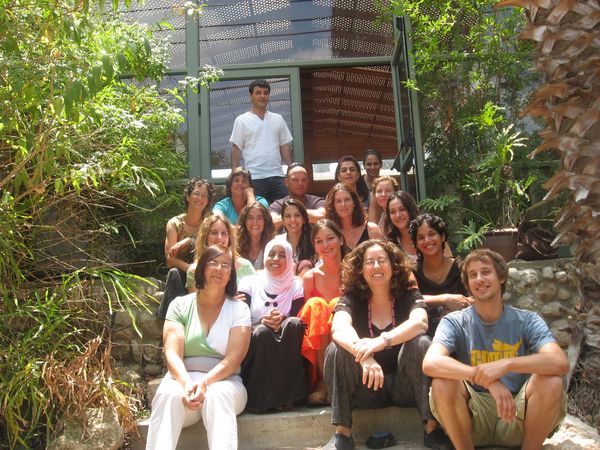
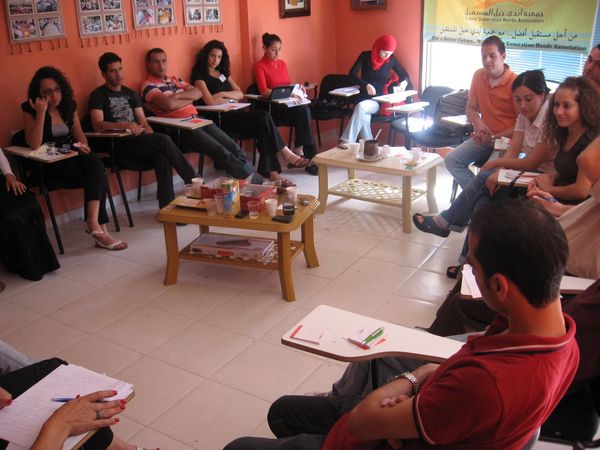
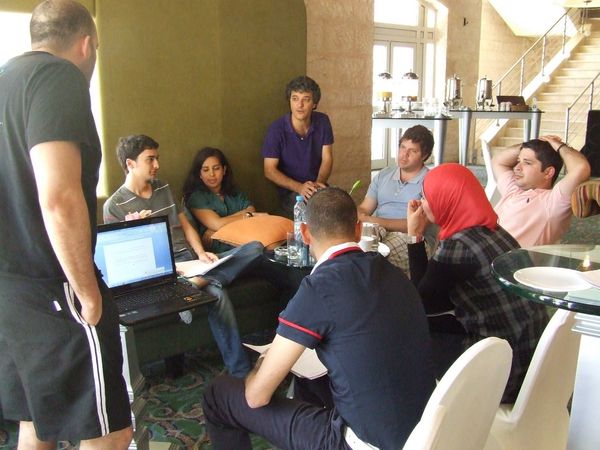
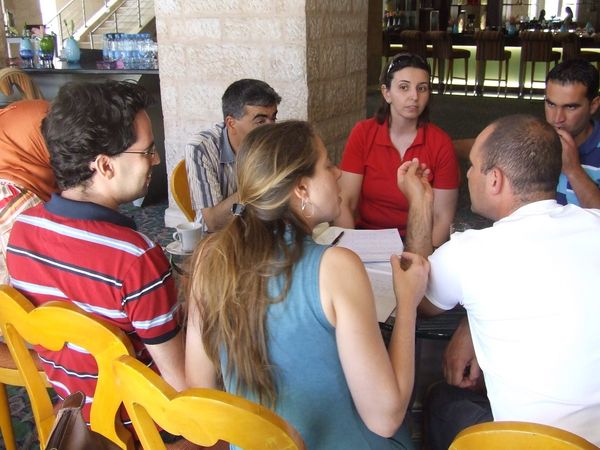

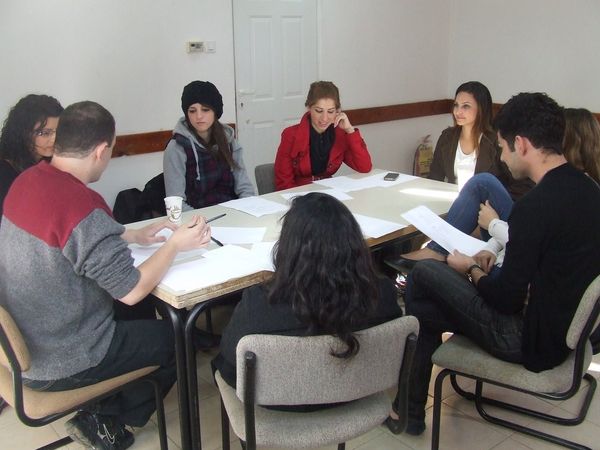
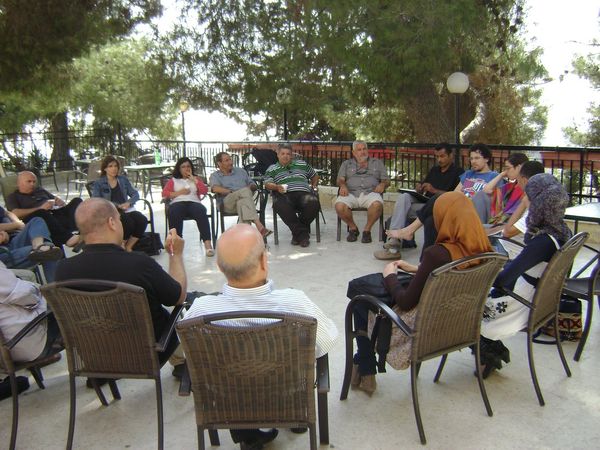
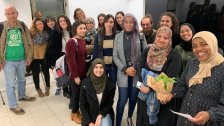
Well-known human rights lawyer gives presentations in the framework of our change agents course
Home > Oasis of Peace > Projects & Outreach > The School for Peace
The School for Peace is a unique educational institution offering Jewish-Arab encounter programs in the spirit of Neve Shalom/ Wahat al Salam. This work promotes better understanding through broad, in-depth examination of the nature of relations between Arabs and Jews.
See the School for Peace website for more
The School for Peace was established at Neve Shalom/ Wahat al Salam as part of the village’s effort to bring about a more just and egalitarian relationship between Arabs and Jews.
School for Peace brochure (PDF)
The School for Peace (SFP) was created in 1979 as an ideological educational institution of Neve Shalom/ Wahat al Salam. Through encounter workshops and training programs, we try to implement the principles on which the community was founded.
Our goal is to develop participants’ awareness of the conflict and their role in it, and enable them to probe and construct their identity through interaction with the other; our orientation is shaped by the quest for a truly humane, egalitarian and just society.
The School for Peace is an autonomous entity. Funding for its activities comes mainly from foundations and Friends of Neve Shalom/ Wahat al Salam associations abroad, as well as from fees charged to participants. The SFP is run by an executive board and a managerial staff headed alternately, in rotation, by an Arab director and a Jewish director. The professional staff comprises a roughly equal number of Jewish and Arab facilitators, with academic backgrounds in the humanities and social sciences, and special training in facilitating groups in conflict. Every encounter program is run by Arab and Jewish facilitators on an egalitarian basis, and strives to address the needs of each national group, acknowledging natural limitations in the ability of each to understand the other.
Since the School for Peace first opened its doors, some 65,000 Jews and Arabs have attended its programs. Some are conducted at the school’s campus at Neve Shalom/ Wahat al Salam; others take place elsewhere in Israel, Palestine, the region, and beyond.
The SFP offerings are diverse and include uni-national and bi-national programs and activities. They are offered to a variety of groups from different sectors of the society – schoolchildren, teachers, students, social service professionals, activists in social change organizations, attorneys, planners, the general public, and professionals who work in various roles with both the Arab and the Jewish populations.
Our intention is to enable participants to enrich their perspectives, to critically examine things ordinarily taken for granted, and to try to comprehend the turbulent and violent processes taking place all around us. We have found that a unique learning experience can be offered by relating directly to events, in a safe space that permits people to examine their feelings and thoughts in the group setting. Facts and information alone are inadequate to create social awareness and prompt a renewed examination of things as they are: We must pose new possibilities and challenge the existing reality. Our team of facilitators brings a critical approach to current reality and emphasizes the implications of majority-minority relations and the asymmetry in the existing power relationships.
Our work is guided by four basic assumptions:
1…The beliefs and outlooks on which a person’s identity and behavior are constructed are deep-seated and stable, and generally resistant to change. Our work attempts to expose these outlooks and permit people to grapple with them.
2… The conflict rests on an encounter between two national groups, not between individuals; hence we see the group as having an essential importance, beyond the sum of the individuals comprising it.
3… The group is a microcosm of reality and thus offers an avenue for learning about the society at large.
4…The encounter group is an open entity, linked to and influenced by the larger reality outside.
The facilitation staff is trained in an approach that stresses dialogue, based on these four assumptions. Facilitators try to uncover and delve into the pertinent relations in the society and to deconstruct oppressive structures – and this approach, in and of itself, conveys an enriching experience that exposes participants to an alternative discourse.
For information about activities and publications of the School for Peace, please visit the dedicated School for Peace web site.
Portfolio
Articles
-
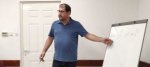 Michael Sfard addresses SFP course for human rights lawyers
16 October 2019 -
 Change agents course for Israeli & Palestinian mental health workers concluded
16 September 2019June 22 2019: with a final workshop and ceremony, the SFP successfully completed an 18-month change agents course for mental health professionals
-
 School for Peace completes change agents course for leaders in shared cities
29 June 2019On June 28-29 we held the final meeting for the Arab - Jewish Shared Cities Leadership Course. The participants initiated a number of significant projects
-
 Up & coming politicians working on joint projects
18 March 2018The 2nd cohort of our Up & Coming Politicians program in a weekend workshop in Beit Jala. Under the guidance of Shahira Shalabi, the group has been developing projects and writing up their work plans.
-
 Mixed cities course visits the Naqab/Negev
6 February 2018 -
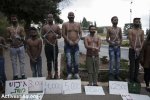 No Human Being Is Illegal – No to Deportation of Refugees!
4 February 2018 -
 School for Peace: Video: Rawnak Natour – Up & Coming Politicians Program
25 December 2017A 2-minute video interview
-
 School for Peace: Irit Keinan Meets with Leader for Change
21 December 2017Following the tour in Jaffa, participants from the Leaders for change in Mixed Cities course met local activists who are leading current social struggles in the city
-
 The School for Peace Annual Report 2017
5 December 2017The SFP recounts an intensive year of activities
-
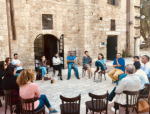 SFP Mixed Cities Course: Intensive Day in Jaffa
29 November 2017The Leaders for Change in Mixed Cities course embarked on an intensive tour in Jaffa, organized by the group’s Jaffa residents.
-
 Planners Course Meets with Alaa Ghantous
21 November 2017The Urban Planners and Architects as Change Agents group met in Eilaboun for their monthly meeting
-
 Third Cycle of Up & Coming Politicians Opens
19 October 2017The School for peace opened the third cycle of the Up & Coming Politicians, Israelis and Palestinians, as Change Agents for future peace & justice.
-
 Dr. Nava Sonnenschein at the Global Peacebuilders Summit
15 October 2017Dr. Nava Sonnenschein, Director of the School for Peace, participated in the Global Peacebuilders Summit in Germany,
-
 Leaders for Change in Mixed Cities Visit Haifa
26 September 2017One of the core objectives of the Leaders for Change in Mixed Cities program by the School for Peace is studying the unique aspects of mixed cities in Israel...
-
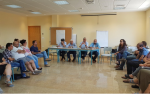 Up & Coming Politicians Preparing for Negotiations
13 September 2017The 2nd group from our Up & Coming Politicians course met in Beit Jala for a bi-national preparatory meeting
-
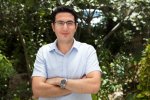 School for Peace: Meet Our Newest Staff Member
8 August 2017The School for Peace is excited and proud to have welcomed a new member to our staff this month - Ameer Fakhoury
-
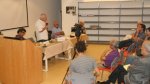 Symposium: Is the Two-State Solution Still Viable?
19 July 2017Seventy people, including physicists and School for Peace graduates, attended the symposium under the title: Is the Two-State Solution Still Viable?
-
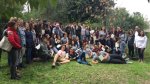 Full report from a SFP youth encounter workshop
19 July 2017Last February a youth encounter took place between at Givat Brenner and Orthodox Nazareth high schools. Here’s a full report, including participants’ quotes
-
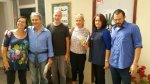 George and Anna Dalaras visit the School for Peace
20 June 2017"The most important thing in your work is that you do here you dig deep to find the roots of bad of aggressiveness and uproot the hatred."
-
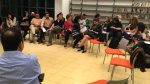 SFP: Round Table with Dr. Marwan Darweish
3 June 2017In an evening attended by 40 people, Dr. Darweish spoke about his research on 45 dialogue organizations.


