 Wahat al-Salam - Neve Shalom
 The School for Peace

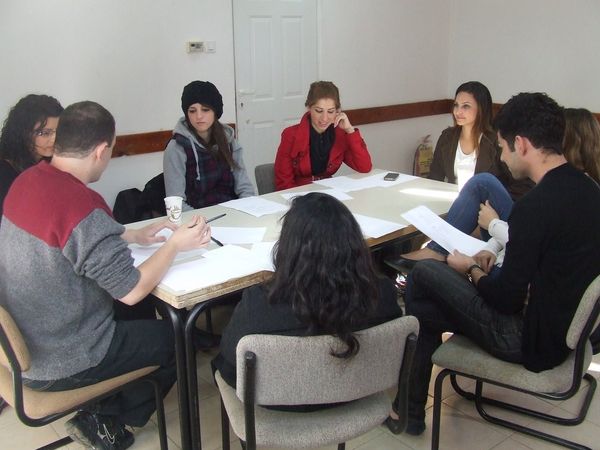
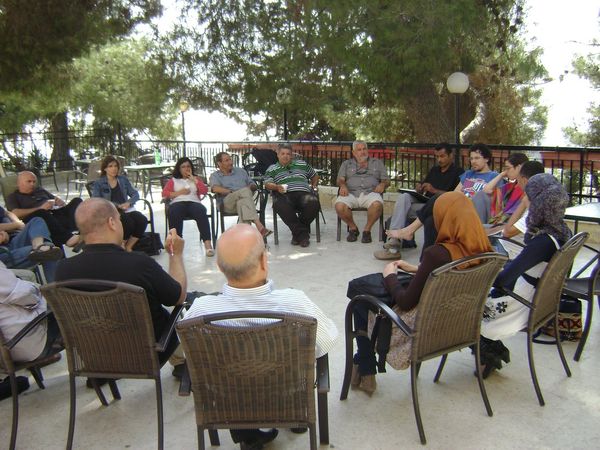
The School for Peace is leading efforts not just to restore the Supreme Court’s position, but to improve human rights legislation for all
Home > Oasis of Peace > Projects & Outreach > The School for Peace
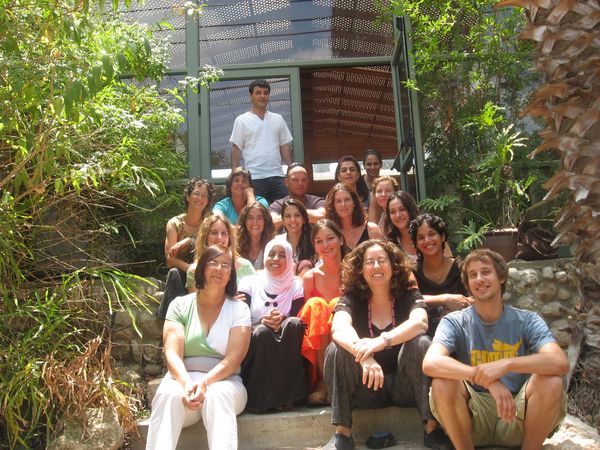
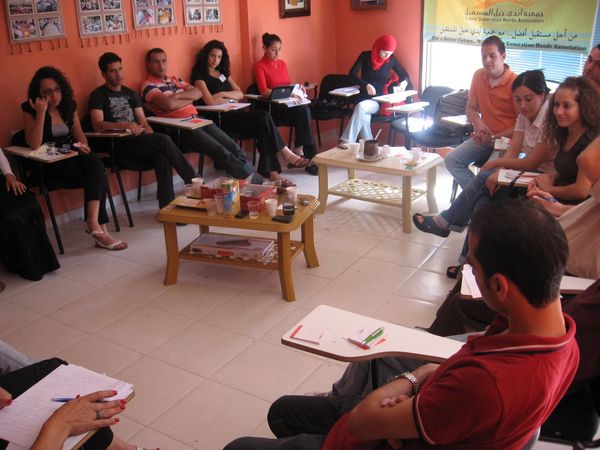
The School for Peace is a unique educational institution offering Jewish-Arab encounter programs in the spirit of Neve Shalom/ Wahat al Salam. This work promotes better understanding through broad, in-depth examination of the nature of relations between Arabs and Jews.
See the School for Peace website for more
The School for Peace was established at Neve Shalom/ Wahat al Salam as part of the village’s effort to bring about a more just and egalitarian relationship between Arabs and Jews.
School for Peace brochure (PDF)
The School for Peace (SFP) was created in 1979 as an ideological educational institution of Neve Shalom/ Wahat al Salam. Through encounter workshops and training programs, we try to implement the principles on which the community was founded.
Our goal is to develop participants’ awareness of the conflict and their role in it, and enable them to probe and construct their identity through interaction with the other; our orientation is shaped by the quest for a truly humane, egalitarian and just society.
The School for Peace is an autonomous entity. Funding for its activities comes mainly from foundations and Friends of Neve Shalom/ Wahat al Salam associations abroad, as well as from fees charged to participants. The SFP is run by an executive board and a managerial staff headed alternately, in rotation, by an Arab director and a Jewish director. The professional staff comprises a roughly equal number of Jewish and Arab facilitators, with academic backgrounds in the humanities and social sciences, and special training in facilitating groups in conflict. Every encounter program is run by Arab and Jewish facilitators on an egalitarian basis, and strives to address the needs of each national group, acknowledging natural limitations in the ability of each to understand the other.
Since the School for Peace first opened its doors, some 65,000 Jews and Arabs have attended its programs. Some are conducted at the school’s campus at Neve Shalom/ Wahat al Salam; others take place elsewhere in Israel, Palestine, the region, and beyond.
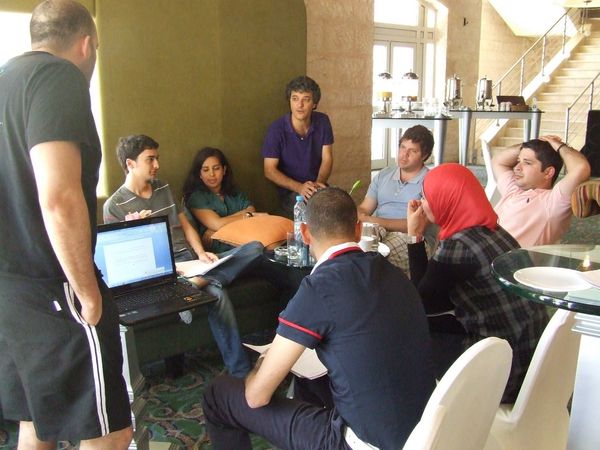
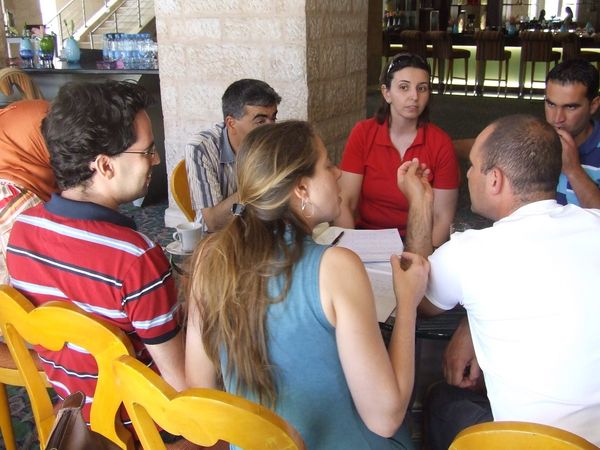
The SFP offerings are diverse and include uni-national and bi-national programs and activities. They are offered to a variety of groups from different sectors of the society – schoolchildren, teachers, students, social service professionals, activists in social change organizations, attorneys, planners, the general public, and professionals who work in various roles with both the Arab and the Jewish populations.
Our intention is to enable participants to enrich their perspectives, to critically examine things ordinarily taken for granted, and to try to comprehend the turbulent and violent processes taking place all around us. We have found that a unique learning experience can be offered by relating directly to events, in a safe space that permits people to examine their feelings and thoughts in the group setting. Facts and information alone are inadequate to create social awareness and prompt a renewed examination of things as they are: We must pose new possibilities and challenge the existing reality. Our team of facilitators brings a critical approach to current reality and emphasizes the implications of majority-minority relations and the asymmetry in the existing power relationships.
Our work is guided by four basic assumptions:
1…The beliefs and outlooks on which a person’s identity and behavior are constructed are deep-seated and stable, and generally resistant to change. Our work attempts to expose these outlooks and permit people to grapple with them.
2… The conflict rests on an encounter between two national groups, not between individuals; hence we see the group as having an essential importance, beyond the sum of the individuals comprising it.
3… The group is a microcosm of reality and thus offers an avenue for learning about the society at large.
4…The encounter group is an open entity, linked to and influenced by the larger reality outside.
The facilitation staff is trained in an approach that stresses dialogue, based on these four assumptions. Facilitators try to uncover and delve into the pertinent relations in the society and to deconstruct oppressive structures – and this approach, in and of itself, conveys an enriching experience that exposes participants to an alternative discourse.
For information about activities and publications of the School for Peace, please visit the dedicated School for Peace web site.
Portfolio
Articles
-
 Judicial Reform and the School for Peace
24 July 2023 -
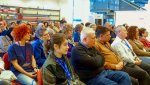 Imagine…
1 May 2023Participants in the SFP Alumni conference imagined a life without conflict
-
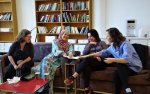 Second Annual School for Peace Alumni Conference
2 April 2023Over one weekend, artists, activists, social workers, planners and more met to think about the future
-
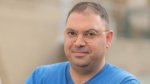 An Interview with an SFP Graduate: Ameer Bisharat
23 February 2023Ameer Bisharat,a graduate of 2 SFP change agents courses, is a member of the Palestinian-Jewish planners’ forum.
-
 Ufuq Yaffa – A New Jaffa Based Activist Group
12 December 2022Between October and November 2022, the School for Peace conducted four meetings for "Utuq Yaffa" - a binational activist group of Palestinian and Jewish residents of Jaffa.
-
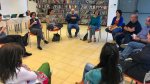 Meeting Summary of the Planners and Architects Courses Graduates Forum
14 November 2022The last meeting of the forum for graduates of planners and architects courses by the School for Peace and the Arab Center for Alternative Planning
-
 School for Peace: dialogue, translate, meet
1 November 2022A weekend for university alumni leads to new insights, a new course opens
-
 Year’s End in the School for Peace
20 September 2022Courses in universities and in WASNS came to an end, but for many, the course is just the beginning
-
 First Alumni Conference in the School for Peace
1 June 2022"Working together and separately" was the topic of the conference. The event ended with presentation of winning alumni projects.
-
 Training Course for Change Agents in the Performing Arts 2021
20 April 2022Between September 2020 and November 2021, the School for Peace conducted a change agents course – the first of its kind – for professionals in the performing arts.
-
 School for Peace grant awards 2022
27 March 2022The SFP announced the winning projects
-
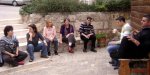 Tova Buksbaum: From the First Change Agents Course to Now
2 March 2022Buksbaum is on the steering committee of the first Alumni conference, Mar. 3-4
-
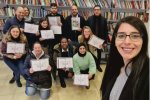 "I am willing to serve in the army, if Israel ends the Occupation"
23 February 2022Article first published in Haaretz newspaper by SFP graduate Raghda Awad
-
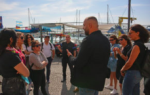 Meeting of the Arab-Jewish Planners Forum in Acre
23 November 202130 graduates of SFP change agents courses, who are now members of the Arab-Jewish Planners Forum, met for a study tour and discussion in Acre.
-
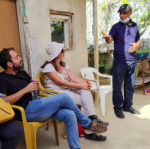 SFP environmental and climate justice course tours the Negev
10 November 2021A tour of the Wadi Attir project and an unrecognized village in the framework of the 7th meeting of the Environmental and Climatic Justice course
-
 Grants for projects by School of Peace graduates: a call for applications
4 November 2021The School for Peace is issuing a second call for proposals for project grants. …
-
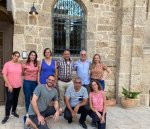 School for Peace Alumni Working for Change in Education
13 October 2021, by Judy HalperThe School for Peace is broadening its reach with alumni, participants, partners and academic institutions
-
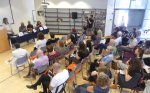 Summer update from the School for Peace
17 August 2021, by Roi SilberbergWorkshop for community center association members, festival for al-Araqib, educators forum, social workers conference, plans for the fall
-
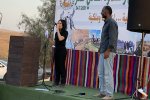 Al Araqib residents embroider dreams of a better future
1 August 2021At an event marking the 11th year since the village’s first demolition, SFP graduates employ art in joining the residents’ struggle to rebuild their homes
-
 New partnerships at the School for Peace
1 August 2021The violence in May shocked many people into action, and the School for Peace has been involved in promoting peaceful actions and activities.


